Screen Time and Dopamine
Why You Can't Stop Scrolling (And What to Do)
Your phone isn't just a device — it's a dopamine slot machine in your pocket. Here's what's actually happening in your brain, why willpower alone won't save you, and how to break free.
You told yourself you'd check your phone for "just a minute." That was an hour ago. Sound familiar?
You're not weak. You're not lazy. Your brain has been hijacked by one of the most sophisticated dopamine delivery systems ever created.
Screen time dopamine addiction isn't some trendy buzzword — it's a real neurological pattern that affects billions of people worldwide. And understanding how it works is the first step to breaking free.
📝 TL;DR
Your phone exploits your brain's dopamine system through variable rewards, infinite scroll, and notification triggers. Over time, this creates genuine addictive patterns — tolerance, withdrawal, and compulsive use. Willpower alone won't fix it. You need environmental changes: app blockers like  BlockerPlus, scheduled phone-free time, and dopamine-healthy habits to rewire your brain.
🧠 What Is Screen Time Dopamine Addiction?
Let's start with the basics. Dopamine isn't a "pleasure chemical" — that's a myth. Dopamine is the chemical of wanting, not having.
It's the anticipation. The craving. The "I wonder what happened while I wasn't looking" pull that makes you reach for your phone before your feet even hit the floor in the morning.
Here's what most people don't realize: every app on your phone was designed by teams of engineers and psychologists whose entire job is to maximize the dopamine response in your brain.
Social media feeds, short-form video, news apps, even email — they all use the same core mechanism: variable intermittent reinforcement.
It's the same principle behind slot machines. You pull the lever (open the app) and sometimes you get a reward (a funny video, a like on your post, an interesting article). But you never know when the reward is coming. That unpredictability is what makes it so powerfully addictive.
4 hrs 37 min
Average daily screen time for adults worldwide in 2026 — up 30% from 2019
Source: DataReportal / GWI
🎰 How Your Phone Became a Slot Machine
Think about it: when was the last time you picked up your phone with a specific purpose and put it down immediately after?
Probably can't remember. That's by design.
Here are the key tricks your phone uses to keep you scrolling:
- Infinite scroll — No natural stopping point. Your brain never gets the "I'm done" signal.
- Pull-to-refresh — Literally mimics pulling a slot machine lever.
- Push notifications — External triggers that hijack your attention dozens of times per day.
- Autoplay — One video ends, another begins. No decision required.
- Social validation — Likes, comments, and followers tap directly into your need for social approval.
- Personalized feeds — AI learns exactly what keeps you hooked and serves more of it.
Each of these features triggers a small dopamine release. And your brain learns to associate your phone with that dopamine hit. Over time, just seeing your phone — or even thinking about it — triggers a craving.
💡 Pro Tip
Try this right now: put your phone in another room for 30 minutes. Notice the urge to check it? That pull you feel is dopamine-driven craving — the same mechanism behind every addictive behavior. Recognizing it is step one.
⚡ The Dopamine Loop: Why Willpower Isn't Enough
Here's the thing: telling yourself to "just use your phone less" is like telling someone with a gambling problem to "just stop playing." It ignores the neuroscience.
Screen time dopamine addiction follows a predictable cycle:
1. Trigger — Boredom, stress, loneliness, or a notification.
2. Craving — Dopamine surges in anticipation of the reward.
3. Response — You pick up the phone and start scrolling.
4. Reward — A funny meme, a like, a new message. Dopamine confirmed.
5. Tolerance — Over time, you need more stimulation. Ten minutes becomes thirty. Thirty becomes two hours.
But it gets worse: your brain doesn't just build tolerance to phone stimulation. It reduces your ability to enjoy everything else.
Research published in Nature Communications found that heavy smartphone users show reduced gray matter volume in brain regions associated with cognitive control. Dr. Anna Lembke, author of Dopamine Nation, describes this as the brain's pleasure-pain balance being tipped — you need more stimulation just to feel normal.
📱 Signs You Have a Screen Time Dopamine Problem
Not sure if your screen time has crossed the line? Here are the warning signs:
- ✅ You check your phone within 5 minutes of waking up
- ✅ You pick up your phone without knowing why
- ✅ You feel anxious or restless without your phone nearby
- ✅ "Quick check" always turns into 30+ minutes
- ✅ You scroll instead of sleeping, even when you're tired
- ✅ Real-life activities feel boring compared to your phone
- ✅ You've tried to reduce screen time and failed
- ✅ Your productivity, relationships, or sleep have suffered
If you checked three or more, your dopamine system is likely being disrupted by screen time. That's not a personal failing — it's a predictable response to technology designed to be addictive.
Take Back Control of Your Screen Time
BlockerPlus blocks distracting content, helps you build healthier habits, and puts you back in charge of your phone — not the other way around.
Download BlockerPlus Free →🔬 The Science: What Screens Actually Do to Your Brain
Let me explain: this isn't pop psychology. The research on screen time and dopamine dysregulation is extensive and growing.
Here's what scientists have found:
Dopamine receptor downregulation. A 2023 study in Biological Psychiatry found that excessive screen use leads to reduced D2 dopamine receptor availability — the same pattern seen in substance addiction. Your brain literally has fewer receptors to process pleasure from normal activities.
Prefrontal cortex impairment. The prefrontal cortex — your brain's "brakes" — shows reduced activity in heavy screen users. This means your ability to make rational decisions about screen time is being actively undermined by the screen time itself.
Cortisol elevation. Constant notifications keep your stress response activated. Your body is pumping cortisol (the stress hormone) every time your phone buzzes, creating a toxic cycle of stress → phone → temporary relief → more stress.
⚠️ Warning
Screen time dopamine addiction doesn't just waste time — it can lead to anxiety, depression, insomnia, and difficulty forming real-world relationships. Research links excessive screen time to a 66% higher risk of depression in young adults. If you're experiencing these symptoms, take it seriously.
Disrupted sleep architecture. Blue light suppresses melatonin, yes. But it's the dopamine stimulation that keeps your brain in "seek" mode long after you've put the phone down. A study in Sleep Medicine Reviews found that screen-based media use before bed increases sleep onset latency by an average of 20 minutes and reduces sleep quality significantly.
🌀 The Connection Between Scrolling and Porn
Here's what most people don't realize: compulsive scrolling and pornography use are driven by the exact same dopamine mechanisms.
The infinite novelty. The escalation. The loss of time. The shame afterward.
Many people who struggle with porn addiction started with "innocent" scrolling that gradually escalated. Social media algorithms push increasingly provocative content because it drives engagement — and before you know it, you've crossed a line you didn't even see.
That's why tools like BlockerPlus don't just block explicit content — they help you build awareness of your overall screen habits and create boundaries that protect your brain's dopamine system.
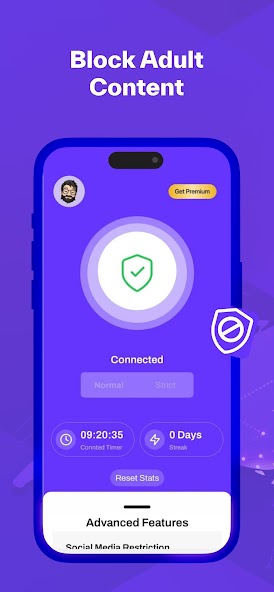
BlockerPlus — block distracting content and build healthier screen habits
🛠️ How to Break the Screen Time Dopamine Cycle
The good news? Your brain is plastic. It can rewire. But you need more than motivation — you need a system.
Here are the most effective strategies, backed by neuroscience and behavioral psychology:
1. Remove the Triggers (Environment Design)
Willpower is a finite resource. The smartest approach is to make the unwanted behavior harder to do.
- 🔒 Install BlockerPlus to block distracting and harmful content at the system level
- 🔕 Turn off all non-essential notifications
- 📵 Remove social media apps from your home screen (or delete them entirely)
- 🛏️ Charge your phone outside the bedroom
- ⏰ Use a physical alarm clock instead of your phone
💡 Pro Tip
The most effective approach combines content blocking with awareness. BlockerPlus doesn't just block — it makes you conscious of your patterns. When you see the block screen, it's a moment of choice instead of mindless consumption.
2. Schedule Dopamine Fasts
A "dopamine fast" doesn't mean eliminating all pleasure. It means giving your brain a break from high-stimulation digital input so it can recalibrate.
- Start with 1 hour per day of phone-free time (not including sleep)
- Work up to one full screen-free day per week
- During fasts: walk, read physical books, cook, exercise, or have face-to-face conversations
- Notice how the first 20 minutes feel uncomfortable, but then something shifts
Dr. Lembke recommends a minimum of 4 weeks of reduced stimulation to see meaningful dopamine receptor recovery. Your brain will heal — but you have to give it time.
🧪 The 30-Day Challenge
Reduce your screen time by 50% for 30 days. Most people report better sleep within the first week, improved mood by week two, and a significant boost in productivity and real-world enjoyment by week four.
3. Replace, Don't Just Remove
Bottom line: you can't just create a void. Your brain will fill it with the old habit unless you give it something else.
The key is to find activities that provide natural, healthy dopamine:
- 🏃 Exercise — The single most powerful natural dopamine booster. Even a 20-minute walk increases dopamine by 20-30%.
- 🧘 Meditation — Increases dopamine baseline by up to 65% according to a study in Cognitive Brain Research.
- 🎵 Music (playing, not just listening) — Engages the reward system without the addictive loop.
- 🤝 Social connection — Real, in-person conversation releases oxytocin and dopamine together.
- 📖 Deep reading — Rebuilds the sustained attention that scrolling destroys.
- 🎨 Creative hobbies — Making something (art, cooking, writing) provides lasting satisfaction vs. the empty calories of scrolling.
4. Use Technology Against Itself
Here's the thing: going completely phone-free isn't realistic for most people. You need your phone for work, communication, navigation.
The goal isn't to eliminate technology — it's to use it intentionally.
That's exactly what BlockerPlus is designed for. Instead of relying on willpower in the moment of temptation, you set up your defenses in advance:
- 🛡️ Block distracting and explicit content before you're tempted
- 🔐 Tamper-proof protection so you can't override it in a weak moment
- 📊 Build awareness of your usage patterns
- 🧠 Create the space between stimulus and response that your prefrontal cortex needs to make good decisions
Your Brain Deserves Better Than Infinite Scroll
BlockerPlus helps you break the dopamine cycle. Block harmful content, reduce compulsive screen time, and start feeling like yourself again.
Get BlockerPlus — It's Free →5. Build an Accountability System
Research consistently shows that accountability is one of the strongest predictors of behavior change. You're far more likely to stick with reduced screen time if someone else knows about your commitment.
- 📱 Share your screen time reports with a trusted friend
- 👥 Join a community (NoFap, Digital Minimalism, or similar)
- 📓 Keep a daily log of your screen time and how you feel
- 🎯 Set specific, measurable goals (not "use my phone less" but "under 2 hours of recreational screen time")
💡 Pro Tip
Combine strategies for maximum effect. Use BlockerPlus to block harmful content, set up scheduled phone-free times, and replace scrolling with exercise. Stacking habits creates a system that's far stronger than any single change.
📊 The Recovery Timeline: What to Expect
If you commit to reducing your screen time and breaking the dopamine cycle, here's what the research suggests you'll experience:
Days 1-3: The hardest part. Restlessness, boredom, anxiety, strong urges to check your phone. This is withdrawal — your brain expecting a dopamine hit it's not getting.
Days 4-7: Adjustment. Urges start to lessen. You begin to notice things around you. Sleep starts improving.
Weeks 2-3: Recalibration. Real-world activities start feeling more enjoyable. Conversations feel richer. You can concentrate for longer periods. This is your dopamine receptors starting to upregulate.
Week 4+: The new normal. You still enjoy your phone, but the compulsion is gone. You can pick it up with a purpose and put it down when you're done. That's the goal.
14 days
The average time for noticeable dopamine receptor recovery after reducing high-stimulation screen time
Source: Dr. Anna Lembke, Dopamine Nation
❓ Frequently Asked Questions
Is screen time dopamine addiction a real addiction?
Yes. While it's not yet a formal DSM-5 diagnosis (Internet Gaming Disorder is), the neurological patterns match substance addiction: tolerance, withdrawal, loss of control, and continued use despite consequences. The WHO recognized "gaming disorder" in 2019, and many researchers argue broader screen addiction meets the same criteria.
How much screen time is too much?
There's no universal number. It's not about hours — it's about control. If you can use your phone intentionally and put it down easily, 3 hours might be fine. If you can't stop at 30 minutes, that's a problem. Focus on the quality of use, not just the quantity.
Can I recover from screen time dopamine addiction?
Absolutely. Your brain's neuroplasticity means it can rewire. But recovery requires consistent effort — reducing high-stimulation screen time, replacing it with healthier dopamine sources, and using tools like BlockerPlus to maintain your boundaries when willpower dips.
Do dopamine detoxes actually work?
The concept is sound, even if the name is imprecise. You can't literally "detox" dopamine — it's always present in your brain. But taking extended breaks from high-stimulation activities does allow your dopamine receptors to recover, making everyday pleasures satisfying again.
🏁 The Bottom Line
Screen time dopamine addiction is one of the defining challenges of modern life. The apps on your phone were engineered by thousands of brilliant people to capture and hold your attention. You are not fighting a fair fight.
But you're not powerless either.
Understanding the dopamine cycle is the first step. Recognizing the signs of addictive behavior is the second. And taking concrete action — changing your environment, building new habits, and using tools designed to help — is how you actually win.
You don't need to go back to a flip phone. You just need to be intentional about how you use the one in your pocket.
Start today. Your brain will thank you.
Ready to Break the Cycle?
BlockerPlus is the free Android app that blocks harmful content, reduces compulsive screen time, and helps you reclaim your dopamine system. Join thousands who've already taken back control.
Download BlockerPlus Free →

The BlockerPlus Team
Digital Wellness & Addiction Recovery Experts
The BlockerPlus team combines expertise in behavioral psychology, digital wellness, and software engineering to create evidence-based tools and resources for people recovering from compulsive pornography use. Our content is researched using peer-reviewed studies and reviewed for accuracy before publication. Learn more about our mission →
📚 References & Sources
- NeuroImage, 2017 — Research published in NeuroImage found that excessive screen time alters brain structure in regions associated with cognitive control
- WHO — The World Health Organization recognizes gaming disorder as a behavioral addiction in ICD-11
- PNAS, 2011 — A study in PNAS found that dopamine release during digital media use follows patterns similar to substance use
All sources were accessed and verified as of April 2026. This article is for informational purposes only and does not constitute medical advice. If you are struggling with compulsive behaviors, please consult a licensed mental health professional.
Preetam Rangadal
Founder, BlockerPlus · Digital Wellness Expert
Preetam is the founder of BlockerPlus, used by 105,000+ people worldwide to overcome porn addiction. With a background in mobile development and a passion for digital wellness, he builds tools that help people take back control of their lives. Learn more →
Disclaimer: This content is for informational purposes only and does not constitute medical or psychological advice. If you're struggling with addiction, please consult a licensed healthcare professional. BlockerPlus is a digital tool, not a substitute for professional treatment.