My Husband Is Addicted to Porn
What to Do (A Compassionate Guide for Partners)
You found it. The search history, the hidden apps, the late nights. Your world just shifted. Here's a step-by-step guide for what to do when your husband is addicted to porn — written with compassion, not judgment.
You weren't snooping. Maybe you picked up his phone to check the time. Maybe the browser was already open. Or maybe you've suspected something for months and finally looked.
However you found out, you're here now — searching "husband addicted to porn what to do" — and your feelings are completely valid.
The shock. The betrayal. The sick feeling in your stomach. The way your brain keeps replaying what you saw. The questions that won't stop: How long? How often? Is it me? Am I not enough?
Let's be clear right now: this is not your fault. Not even a little bit. And you're not alone — millions of partners are going through this exact same thing.
📝 TL;DR
If your husband is addicted to porn, don't blame yourself — his addiction predates you. Process your emotions first, then have an honest conversation without ultimatums. Set clear boundaries, seek professional help (individually and together), and use accountability tools like BlockerPlus to remove access and rebuild trust through transparency. Recovery is possible, but only if he's willing to do the work — and only if you protect yourself in the process.
💔 First: What You're Feeling Is Real (And Normal)
Before we get into the "what to do" part, let's talk about what's happening inside you right now.
When you discover your husband's porn addiction, your brain processes it similarly to discovering an affair. Researchers call this betrayal trauma — and it's not an exaggeration.
A landmark 2015 study by Dr. Barbara Steffens found that 69% of partners of sex/porn addicts met the clinical criteria for PTSD. Not grief. Not sadness. Full post-traumatic stress.
Here's what most people don't realize:
Your body is in fight-or-flight mode right now. That's why you can't sleep, can't eat, can't stop thinking about it. Your nervous system has registered a threat to your most intimate relationship — and it's responding accordingly.
Common reactions include:
- • Obsessive thoughts — replaying what you found, imagining worst-case scenarios
- • Body image spiraling — comparing yourself to what he watched
- • Rage — wanting to scream, throw things, or leave immediately
- • Numbness — feeling nothing at all, like you're watching yourself from outside
- • Hyper-vigilance — checking his phone, monitoring his every move
- • Self-blame — wondering if you drove him to it
All of these are normal trauma responses. You are not "crazy." You are not "overreacting." Your pain is proportional to the betrayal.
69%
of partners of porn/sex addicts meet clinical criteria for PTSD
— Dr. Barbara Steffens, PhD, "Your Sexually Addicted Spouse"
🚫 What NOT to Do (Common Mistakes That Make It Worse)
Your first instincts might feel powerful — but some of them will backfire. Here's what to avoid:
1. Don't Confront Him in Rage
You have every right to be furious. But confronting your husband while you're still in shock typically leads to:
- • Him getting defensive and shutting down
- • Saying things you can't take back
- • Him minimizing ("It's just porn, everyone watches it")
- • The conversation becoming about your reaction instead of his behavior
Wait at least 24-48 hours before having "the conversation." You need time to process, and he needs to not feel ambushed.
2. Don't Try to "Compete" With Porn
This is the most heartbreaking mistake. Some partners try to become more sexual, change their appearance, or do things they're uncomfortable with — hoping that being "enough" will make him stop.
Think about it:
You cannot compete with an infinite library of novel stimulation. That's not a reflection of your attractiveness — it's the nature of addiction. His brain has been hijacked by supernormal stimuli that no real human can replicate.
3. Don't Keep It a Secret
Isolation is the enemy. If you tell no one, you'll carry this alone — and that weight will crush you. Tell at least one trusted person: a friend, a therapist, a support group.
⚠️ Warning
Do not snoop through every device, email, and social media account trying to find "everything." Trauma researchers call this pain shopping — and it deepens your wound without helping you heal. Get the information you need, then stop. A therapist can help you determine what's necessary vs. harmful to know.
🗣️ How to Have "The Conversation" (Step by Step)
Once you've had time to breathe — even a day or two — it's time to talk. Here's how to approach it in a way that actually leads somewhere productive.
Step 1: Choose the Right Time and Place
Not in front of the kids. Not at midnight. Not when either of you has somewhere to be in 30 minutes. Pick a private, calm moment where you won't be interrupted.
Step 2: Lead With What You Know, Not Accusations
Instead of "You're a porn addict!" try something like:
"I found [specific thing] on your phone/computer. I need you to be honest with me about what's been going on."
This is not about being gentle with him — it's about keeping the conversation open long enough to get real answers.
Step 3: Listen to His Response — But Watch for Minimizing
Here's the thing:
Most men who are caught will minimize. They'll say:
- • "It was only once or twice"
- • "Every guy watches porn"
- • "It doesn't mean anything"
- • "I can stop whenever I want"
These are defense mechanisms, not honesty. If he's been hiding it, it's been going on longer than he'll initially admit. That's the nature of addiction — denial is built into it.
Step 4: State What You Need
Don't issue an ultimatum on the spot. Instead, be clear about what you need to feel safe:
- • Complete honesty about the scope of the problem
- • Willingness to get help (therapy, support groups, accountability tools)
- • Concrete action — not just promises to "try harder"
- • Transparency with devices — installing a blocker like BlockerPlus that you both can monitor
The key phrase here: "I need to see action, not just words."
 BlockerPlus
Rebuild trust through transparency. BlockerPlus blocks porn at the device level — and lets both partners see that it's working. No more guessing. No more checking.
Download Free on Google Play →📋 Setting Boundaries (Not Ultimatums)
There's a critical difference between boundaries and ultimatums — and getting this right changes everything.
An ultimatum is about controlling him: "Stop watching porn or I'm leaving."
A boundary is about protecting yourself: "I can't stay in a relationship where I feel unsafe and deceived. If things don't change, I'll need to make decisions to protect my own wellbeing."
But it gets worse:
Ultimatums without follow-through actually enable addiction. If you say "stop or I'm leaving" and then don't leave when he doesn't stop, you've taught him that your words don't carry weight.
Instead, set boundaries you're genuinely prepared to enforce:
- • "I need you to install a porn blocker on all your devices within 48 hours."
- • "I need us both to start individual therapy within two weeks."
- • "I need full transparency with your devices — no deleted history, no secret apps."
- • "I need you to join a recovery group (like SMART Recovery or SA) by the end of this month."
The good news?
Boundaries actually help recovery. Research on addiction shows that clear, consistent consequences are one of the most effective motivators for change. You're not being controlling — you're being clear.
💡 Pro Tip
Write your boundaries down. When emotions are high, it's easy to forget what you decided. Having a written list also helps in couples therapy — your therapist can help you evaluate which boundaries are healthy and which might need adjusting.
🛠️ Practical Steps: What "Getting Help" Actually Looks Like
Saying "get help" is easy. Knowing what help looks like is harder. Here's a concrete roadmap:
1. Install a Porn Blocker — Today
This is the single most important first step. Not because a blocker alone fixes addiction — but because it removes the easiest access point and creates accountability.
BlockerPlus is specifically designed for this situation. It:
- • Blocks porn across all browsers and apps on Android
- • Can't be easily bypassed — no sneaky incognito workarounds
- • Provides accountability features so both partners can see that boundaries are being maintained
- • Is free to download — no excuses about cost
Let me explain:
Think of a blocker like removing alcohol from the house when someone is trying to get sober. It doesn't cure the addiction, but it eliminates the path of least resistance. Every moment of friction between your husband and porn is a moment where his rational brain can override his impulse.
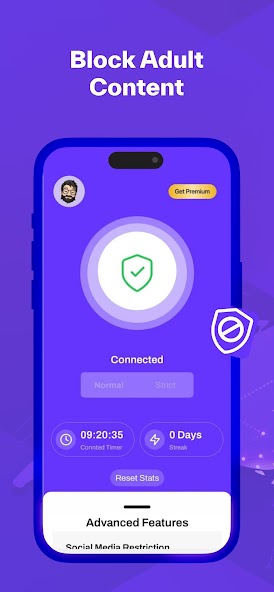
BlockerPlus — comprehensive porn blocking for Android devices
2. Individual Therapy — For BOTH of You
He needs a therapist who specializes in compulsive sexual behavior (look for a CSAT — Certified Sex Addiction Therapist). You need a therapist who understands betrayal trauma.
This is not couples therapy. Not yet. Individual work comes first.
Why? Because couples therapy before individual work often turns into:
- • Him performing "recovery" for you instead of doing real inner work
- • You suppressing your pain to "work on the relationship"
- • A therapist who accidentally enables by treating this as a "both sides" issue
🔍 Finding the Right Therapist
Search Psychology Today's directory and filter by "sex addiction" or "compulsive sexual behavior." For partners, look for therapists who specialize in "betrayal trauma" or "partner trauma." APSATS (Association of Partners of Sex Addicts Trauma Specialists) also maintains a directory.
3. Support Groups — You're Not Alone in This
For him: Sex Addicts Anonymous (SAA), SMART Recovery, or online communities like r/pornfree on Reddit.
For you: S-Anon, COSA (Co-Sex Addicts Anonymous), or Bloom for Women — an online resource specifically for partners of porn addicts.
Bottom line:
Isolation feeds addiction AND betrayal trauma. Both of you need people who understand what you're going through — people who won't minimize with "it's just porn" or "at least he didn't have a physical affair."
4. Couples Therapy — When The Time Is Right
After 2-3 months of individual work, couples therapy can begin. Look for a therapist trained in the Gottman Method or Emotionally Focused Therapy (EFT) — both are evidence-based and effective for rebuilding trust after betrayal.
The focus of couples therapy should be:
- • Rebuilding communication patterns
- • Processing the betrayal (with professional guidance)
- • Creating new intimacy patterns
- • Establishing ongoing accountability structures
🔄 What Recovery Actually Looks Like (The Honest Truth)
Let's be real: porn addiction recovery is not a straight line. Here's what to genuinely expect.
The First 30 Days
The hardest part. He may experience withdrawal symptoms — irritability, insomnia, anxiety, intense cravings. This is actually a good sign — it means his brain is recalibrating.
This is where tools like BlockerPlus are critical. Willpower alone fails in moments of weakness. A blocker acts as an external guardrail when his internal ones aren't strong enough yet.
For you, these first 30 days are about processing. Cry when you need to. Journal. Talk to your therapist. Don't try to be strong for him right now.
Months 2-6: The Roller Coaster
Some days will feel hopeful. You'll see changes. He'll be more present, more emotionally available.
Then a trigger hits. Maybe he's stressed at work. Maybe you had a fight. And old patterns resurface.
Here's the thing:
Slips are not the same as relapses. A slip is a momentary stumble followed by immediate honesty and renewed commitment. A relapse is falling back into the pattern of secrecy and regular use.
What matters isn't whether he stumbles — it's what he does after. Does he tell you? Does he call his therapist? Does he lean into his accountability tools? Or does he hide it again?
BlockerPlus
Recovery requires removing access. BlockerPlus blocks porn on Android at the system level — across every browser, every app. One less battle to fight.
Get BlockerPlus Free →🚩 Red Flags That Recovery Isn't Real
Not every husband who says "I'll change" actually means it. Watch for these warning signs:
- • Refuses to install a blocker — "I don't need that, I have self-control." (If he had self-control, you wouldn't be reading this.)
- • Refuses therapy — "I can handle this on my own."
- • Blames you — "If you were more [sexual/attractive/available], I wouldn't need porn."
- • Gets angry when you express pain — "Why can't you just get over it?"
- • Secret devices or accounts — finds new ways to access porn while claiming to be clean
- • Performing recovery — goes through the motions in front of you but does no real work
The good news?
Genuine recovery looks completely different. A husband who is truly committed will:
- • Volunteer to install BlockerPlus or similar tools without being asked twice
- • Attend therapy consistently, not just when things are bad
- • Take full responsibility without blaming you
- • Be patient with your healing timeline
- • Accept that trust is rebuilt through sustained action, not words
💡 Pro Tip
Track recovery progress together. Some couples create a shared "recovery checklist" — therapy sessions attended, days since last slip, blocker status on all devices. It sounds clinical, but transparency is the antidote to secrecy. BlockerPlus's accountability features can be part of this system.
🤔 "Should I Stay or Should I Go?"
This is the question that keeps you up at 3 AM. And here's the honest answer:
Nobody can make this decision for you. But there are factors that can help you evaluate.
Reasons to Stay and Fight
- • He's genuinely remorseful (not just sorry he got caught)
- • He's taking concrete action — therapy, blockers, support groups
- • He takes full ownership without blame-shifting
- • The relationship had a strong foundation before this
- • He's patient with your healing and doesn't rush you
Reasons to Seriously Reconsider
- • He refuses to acknowledge it's a problem
- • He blames you for his addiction
- • He's abusive (emotionally or physically) on top of the addiction
- • He won't take any concrete steps toward recovery
- • This isn't the first time — and previous promises were broken
- • His porn use involves illegal content
Let me explain:
You are not obligated to stay in a relationship that is destroying you. Love is not enough if it's only flowing in one direction. Your mental health, your self-worth, and your wellbeing matter just as much as saving the marriage.
58%
of couples who seek professional help for porn addiction report significant relationship improvement within 12 months
— Journal of Marital and Family Therapy
🛡️ Protecting Yourself (And Your Kids)
If there are children in the home, you have an additional responsibility — and it requires clear-eyed action.
- • Lock down every device in the house with a blocker. BlockerPlus can protect Android devices your children might access.
- • Talk to your kids age-appropriately about internet safety (not about their father's specific issue)
- • Monitor shared devices — don't assume they haven't encountered what he's been watching
- • Shield them from conflict — children should not know the details of their parents' sexual issues
For a deeper guide on talking to children about online safety, read our guide: How to Talk to Your Child About Online Safety and Porn.
💪 Your Recovery Matters Too
Here's something nobody tells partners: you have your own recovery journey. It runs parallel to his — but it's entirely yours.
Your healing doesn't depend on whether he recovers. Let that sink in.
Your recovery includes:
- • Processing the trauma with a qualified therapist (not just any therapist — one who understands betrayal trauma)
- • Rebuilding your self-image — his addiction had nothing to do with your worth
- • Reconnecting with yourself — hobbies, friendships, goals that existed before this crisis
- • Learning about addiction — understanding the science removes some of the personal sting (read: How Porn Affects Your Brain)
- • Setting boundaries that protect your peace — and enforcing them
You didn't cause this. You can't cure it. And you can't control it. But you can control how you respond — and that starts with taking care of yourself.
BlockerPlus
Take the first concrete step today. BlockerPlus blocks porn on every Android browser and app — free to download, simple to set up. One decision that changes everything.
Download BlockerPlus Free →📚 Resources for Partners
You don't have to figure this out alone. Here are the best resources available:
Books
- • "Your Sexually Addicted Spouse" by Barbara Steffens & Marsha Means — the gold standard for partner healing
- • "Mending a Shattered Heart" by Stefanie Carnes — practical exercises for recovery
- • "Your Brain on Porn" by Gary Wilson — understanding the neuroscience (helps remove self-blame)
Online Communities
- • Bloom for Women (bloomforwomen.com) — courses and community specifically for betrayed partners
- • r/loveafterporn — Reddit community of partners going through this
- • S-Anon (sanon.org) — 12-step program for partners
Tools
- • BlockerPlus — free Android porn blocker with accountability features
- • Fortify — recovery program with video courses
- • Psychology Today Therapist Finder — filter by specialty
💡 Pro Tip
Bookmark this page. You'll want to come back to it. Recovery isn't a one-time read — it's a journey. And on the hard days, having a roadmap matters more than you think.
✊ You're Stronger Than You Think
Right now, everything hurts. The trust feels shattered. The future feels uncertain. You might not even recognize your life right now.
But here's what I want you to remember:
You are not broken. You are a person who was hurt by someone you trusted — and you're doing the brave, hard work of figuring out what comes next.
Whether your marriage survives this depends on both of you — but whether YOU survive and thrive depends only on you.
Take the first step today. Talk to someone. Find a therapist. Install BlockerPlus on his devices. Set one boundary.
One step at a time. You've got this.
📖

The BlockerPlus Team
Digital Wellness & Addiction Recovery Experts
The BlockerPlus team combines expertise in behavioral psychology, digital wellness, and software engineering to create evidence-based tools and resources for people recovering from compulsive pornography use. Our content is researched using peer-reviewed studies and reviewed for accuracy before publication. Learn more about our mission →
📚 References & Sources
- The Gottman Institute — The Gottman Institute provides evidence-based relationship advice on addressing pornography in marriages
- Archives of Sexual Behavior, 2018 — Research in Archives of Sexual Behavior found that perceived pornography addiction predicts relationship distress
- AAMFT — The American Association for Marriage and Family Therapy provides guidance for couples
All sources were accessed and verified as of April 2026. This article is for informational purposes only and does not constitute medical advice. If you are struggling with compulsive behaviors, please consult a licensed mental health professional.
Preetam Rangadal
Founder, BlockerPlus · Digital Wellness Expert
Preetam is the founder of BlockerPlus, used by 105,000+ people worldwide to overcome porn addiction. With a background in mobile development and a passion for digital wellness, he builds tools that help people take back control of their lives. Learn more →
Disclaimer: This content is for informational purposes only and does not constitute medical or psychological advice. If you're struggling with addiction, please consult a licensed healthcare professional. BlockerPlus is a digital tool, not a substitute for professional treatment.